Global Peptide Groups - The Metanis Group
Located in the historic hills of Jerusalem, the Metanis group at the Hebrew University of Jerusalem's Institute of Chemistry is on a mission to deploy the tools of chemical protein synthesis, state-of-the-art ligation methods, and the unique properties of selenium and selenocysteine to explore the world of peptides and proteins. By combining organic synthesis, peptide chemistry, and structural biology, the group is able to tackle a wide range of scientific challenges. From the role of peptides in the origin of life to the development of new therapeutics, the Metanis group does it all. Whether synthesizing complex proteins one peptide bond at a time, swapping sulfur for selenium, or inventing new ways to stitch peptides together, the group pushes the limits of what chemistry can do with life's favorite polymers.
The lab brings together a diverse team of postdoctoral, graduate, and undergraduate students from across Israel and beyond, embracing a collaborative, curious, and supportive culture. It is an environment in which students are encouraged to take initiative and learn new skills, with a strong emphasis on mentorship and on molding the next generation of scientists.
In addition to the Institute of Chemistry, the group is part of the Hebrew University Center for Nanoscience and Nanotechnology as well as the Casali Center of Applied Chemistry, where Professor Metanis serves as chair. The group collaborates broadly, both within Israel and internationally, allowing its synthetic proteins to be studied in many contexts and from many different angles.
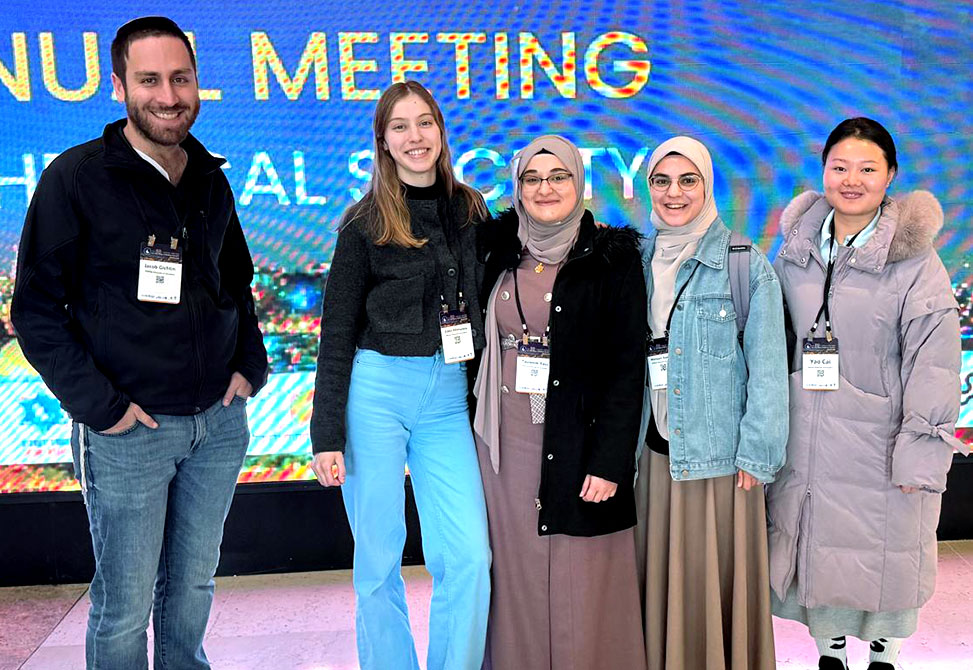
ICS Conference, 2025
The group pushes the boundaries of science by performing the total chemical synthesis and semi-synthesis of peptides and proteins. This enables the precise incorporation of unnatural amino acids, post-translational modifications, and amino acids that are difficult to express recombinantly, selenocysteine (Sec) in particular, giving direct access to proteins that are difficult or impossible to obtain by standard recombinant expression.
The Chemistry of Selenium and Selenocysteine:
One of the group's central focuses is selenium chemistry, with particular interest in the 21st amino acid, selenocysteine. Because Sec is more reactive than cysteine (Cys), and because seleno-bonds have unique structural and redox properties, the group can exploit them in several ways. Substituting Cys with Sec allows the group to probe folding, stability, and catalytic or redox behavior. Developing new ligation and protein modification techniques expands the scope of chemical protein synthesis, opening access to new peptide scaffolds and protein modifications. And, building on this chemistry, the group studies the sparsely characterized selenoproteins, with special interest in human selenoproteins.
Therapeutic Peptide and Protein Design:
The group explores therapeutic peptide and protein design, using chemical synthesis to create new or improved molecules that are more stable, more active, or both. This work ranges from diselenide-stabilized analogues of existing drugs to highly stable, selective macrocyclic peptide inhibitors.
Peptides at the Origin of Life:
Beyond new peptide and protein chemistry, the Metanis group also explores how simple chemical systems could have evolved toward biological complexity, and how primitive peptides could have participated in early life, connecting contemporary peptide science with one of Earth's most profound questions: how life first arose from simple molecules.
From the past to the future, if it has to do with peptides and proteins, chances are the Metanis group will want to study it.
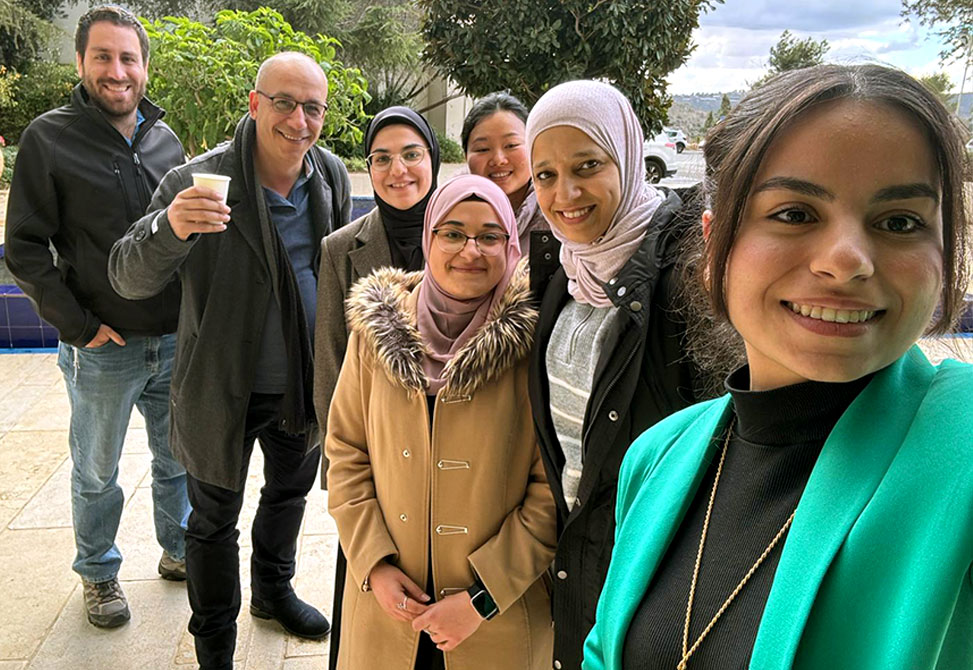
The Norman Metanis Group at the 2024 Casali Conference
Selected Recent Publications
Weil-Ktorza, O.; Dhayalan, B.; Chen, Y.-S.; Weiss, M. A.; Metanis, N. Se-Glargine: Chemical Synthesis of a Basal Insulin Analogue Stabilized by an Internal Diselenide Bridge. ChemBioChem 2024, 25 (5), e202300818. DOI: 10.1002/cbic.202300818.
Longo, L. M.; Despotović, D.; Weil-Ktorza, O.; Walker, M. J.; Jabłońska, J.; Fridmann-Sirkis, Y.; Varani, G.; Metanis, N.; Tawfik, D. S. Primordial Emergence of a Nucleic Acid-Binding Protein via Phase Separation and Statistical Ornithine-to-Arginine Conversion. Proc. Natl. Acad. Sci. U.S.A. 2020, 117 (27), 15731–15739. DOI: 10.1073/pnas.2001989117.
Zhao, Z.; Shimon, D.; Metanis, N. Chemoselective Copper-Mediated Modification of Selenocysteines in Peptides and Proteins. J. Am. Chem. Soc. 2021, 143 (32), 12817–12824. DOI: 10.1021/jacs.1c06101.
Wang, C.; Zhao, Z.; Ghadir, R.; Yang, D.; Zhang, Z.; Ding, Z.; Cao, Y.; Li, Y.; Fassler, R.; Reichmann, D.; Zhang, Y.; Zhao, Y.; Liu, C.; Bi, X.; Metanis, N.; Zhao, J. Peptide and Protein Cysteine Modification Enabled by Hydrosulfuration of Ynamide. ACS Cent. Sci. 2024, 10 (9), 1742–1754. DOI: 10.1021/acscentsci.4c01148.
Zhao, Z.; Huang, J.; Cai, Y.; Zhou, T.-P.; Khatib, F.; Shimon, D.; Wang, B.; Metanis, N. Late-Stage Aromatic C–H Bond Functionalization for Cysteine/Selenocysteine Bioconjugation. J. Am. Chem. Soc. 2025, 147 (35), 31811–31820. DOI: 10.1021/jacs.5c08936.
Ghareeb, H.; Yi Li, C.; Shenoy, A.; Rotenberg, N.; Shifman, J. M.; Katoh, T.; Sagi, I.; Suga, H.; Metanis, N. Mirror-Image Random Nonstandard Peptides Integrated Discovery (MI-RaPID) Technology Yields Highly Stable and Selective Macrocyclic Peptide Inhibitors for Matrix Metallopeptidase 7. Angew. Chem. Int. Ed. 2025, 64 (8), e202414256. DOI: 10.1002/anie.202414256.
Weil-Ktorza, O.; Naveh-Tassa, S.; Fridmann-Sirkis, Y.; Despotović, D.; Cherukuri, K. P.; Corlett, T.; Levy, Y.; Metanis, N.; Longo, L. M. Functional Ambidexterity of an Ancient Nucleic Acid-Binding Domain. Angew. Chem. Int. Ed. 2025, 64 (25), e202505188. DOI: 10.1002/anie.202505188.
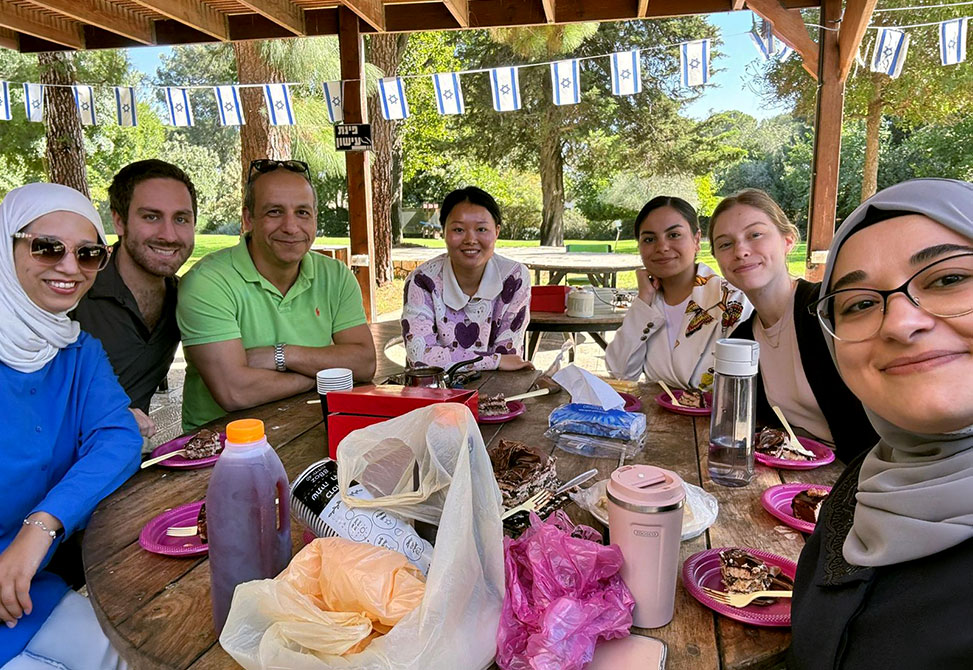
The Norman Metanis Group at the 2024 Casali Conference
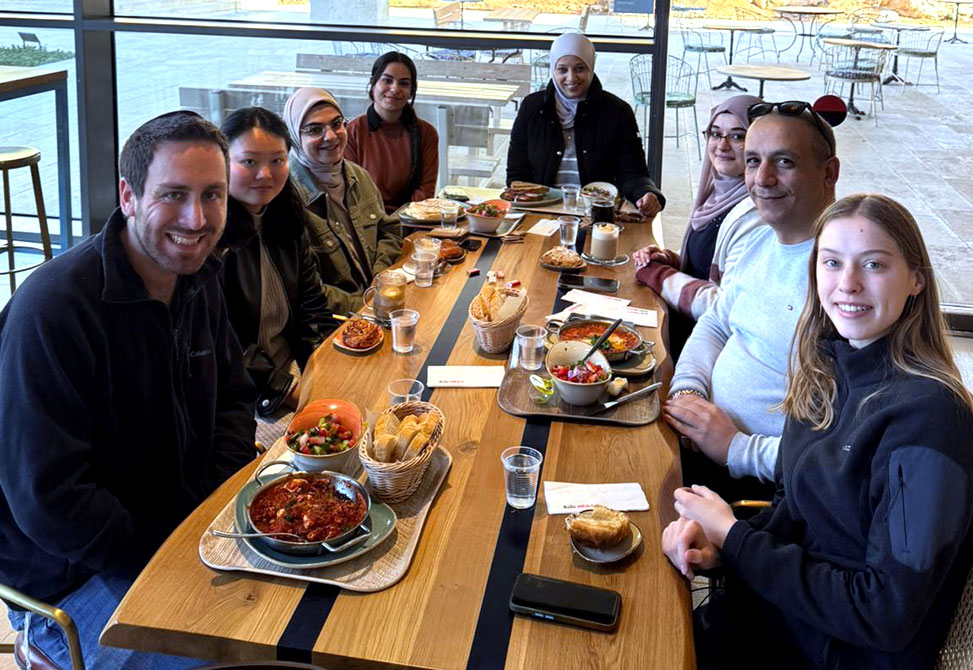
The Norman Metanis Group at the 2024 Casali Conference
A Conversation with Professor Norman Metanis
APS: Could you tell us a little about your path into peptide and protein chemistry?
Metanis: I was always interested in medicinal chemistry, especially in bioorganic chemistry and protein science. I decided to study the chemical synthesis of peptides and proteins, and so I joined the Phil Dawson group at Scripps Research.
APS: Your group places a strong emphasis on selenocysteine chemistry. What motivated you in that direction?
Metanis: It was by chance! As an undergrad at the Technion I was taught that there are 20 amino acids, but later, when I started my Ph.D., I was reading a review article and came across the sentence “selenocysteine (Sec) is the 21st encoded amino acid.” That triggered something in me, and as a result I decided to focus on the chemistry of this amino acid. Soon after, I realized that the codon for Sec is a stop codon (UGA), which complicates many studies of natural selenoproteins. So I decided to use chemical protein synthesis to shed light on Sec chemistry. That led to the first total chemical synthesis of a protein with Sec residues (JACS 2006), studies of its redox behavior, and the rest is history.
APS: That early work led to one of your most striking findings, that replacing a disulfide with a diselenide could dramatically change how a protein folds. Could you tell us about that?
Metanis: Yes. During my Ph.D. I synthesized the enzyme glutaredoxin 3 and replaced the active-site cysteines of its CXXC motif with selenocysteines. The diselenide variant folded much faster than the native, disulfide enzyme, by orders of magnitude. At the time, diselenide bonds were thought of mostly as a chemical curiosity. This result suggested they might play a real role in protein folding and stability, and later work in the field supported that idea. For me it confirmed that selenium is not just a label or a synthetic trick; a single atom can change the chemistry of folding itself. That insight has guided much of what we do.
APS: The Se-Glargine project applies that diselenide chemistry to insulin. How do you approach turning a chemical insight into a potential therapeutic?
Metanis: Insulin is a demanding molecule to work with, which is exactly why it is a good test. Together with Michael Weiss, we asked whether replacing one of insulin's native disulfides with an internal diselenide bridge could give a more stable basal insulin analogue that still functions normally. The hard part is that you cannot optimize for stability alone; the molecule has to keep its native fold and its biological activity. A modification that stabilizes the molecule but abolishes its function is just chemistry. One that improves stability while preserving function is a real step forward. That balance is what we look for.
APS: Your mirror-image RaPID collaboration with Hiroaki Suga produced highly stable, selective macrocyclic inhibitors. What does the mirror-image strategy make possible?
Metanis: Proteases are the main obstacle for peptide drugs; they degrade them quickly. The mirror-image approach is an elegant way around that. You prepare the target protein in its mirror-image, all-D form, run the macrocycle selection against it, and then resynthesize the best binder in its own mirror image. The result is an all-D peptide that binds the natural target but resists natural proteases. With our MMP7 inhibitor we saw exactly that: potent and selective binding, with excellent stability in serum and in simulated gastric and intestinal fluids. That stability is what could allow a macrocyclic peptide to survive as a real therapeutic.
APS: A great deal of your recent work develops new ways to modify cysteine and selenocysteine selectively. Where do you see the methodological frontier for chemical protein synthesis?
Metanis: Making a small protein chemically is now routine for a well-trained group. The frontier is precision and scope, reactions that modify a single cysteine or selenocysteine in the presence of everything else, under mild and biocompatible conditions. We have developed copper-mediated modification of selenocysteines and, more recently, late-stage aromatic C–H functionalization for cysteine and selenocysteine. The goal is to give chemists and biologists precise, dependable handles for attaching whatever they need at exactly one site on a peptide or protein. When methods like these become routine, they unlock a great deal of biology.
APS: One of your newer directions reaches all the way back to the origin of life. How did a chemical protein synthesis lab come to study early chemistry and chirality?
Metanis: It grew naturally out of our interest in chirality and in the molecules themselves. The earliest peptides were probably mixtures of left- and right-handed amino acids, and how life settled on a single handedness is a deep open question. With collaborators such as Liam Longo, the late Dan Tawfik, and Ron Naaman, we have studied peptide–RNA coacervates as an environment that could have sheltered the first folded domains, and looked at how properties like chirality and electron spin help fragile peptide–nucleic acid complexes persist. It is more speculative than our therapeutic work, but it uses the same core skill: making exactly the molecules we want to study, including ones with unnatural stereochemistry, and seeing what they do.
APS: How do you see your work fitting into the broader field of peptide science?
Metanis: My work fits into peptide science by linking precise chemical synthesis and modification with mechanistic biology and therapeutic design. I develop methods to build and tailor peptides and proteins, including constrained and modified scaffolds, to address key challenges like selectivity, stability, and activity. With peptide therapeutics rapidly expanding as a drug modality, these capabilities help broaden what peptides can do and where they can succeed clinically.
APS: You trained across Israel, the United States, and Switzerland before building your own group in Jerusalem. What do you try to pass on to your students?
Metanis: That chemical protein synthesis is a craft as much as a science, and that patience at the bench matters. A long synthesis or ligation can fail for reasons that take weeks to understand, and I want my students to have the persistence to work through that. I also want them to be comfortable moving between organic synthesis, peptide chemistry, and biology, because our problems live at those intersections. The students who do best treat the boundaries between disciplines as porous. My aim is to train independent scientists, not extra pairs of hands.
APS: Looking ahead, what excites you most about the future of peptide and protein science?
Metanis: What excites me most is that peptide and protein science is finally moving from “promising” to genuinely delivering medicines. We are starting to see peptides tackle problems where small molecules struggle, across areas like obesity, cancer, and neurodegeneration, and the clinical pipeline keeps growing. For me, the next big step is making these molecules more drug-like in the real world: stability, delivery, and truly selective, controllable activity. That is exactly the direction I want my lab to keep pushing.
APS: A closing thought you would like to share with the peptide community.
Metanis: I have a long connection to this community; some of my earliest recognition as a young scientist came through the American Peptide Society. What I value most is its generosity across the chemistry–biology divide. Selenium is a small example of that spirit: one atom, borrowed from a quiet corner of the periodic table, that turns out to help with folding, with stability, with therapeutics, and even with questions about how life began. There is still a great deal to build, and I am optimistic about the people who will build it.
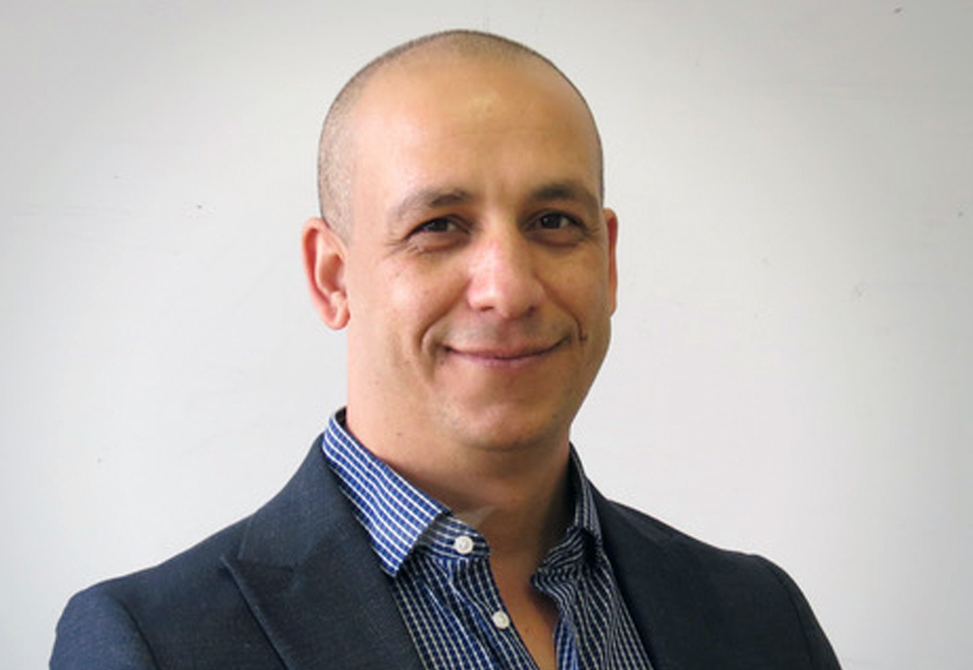
Professor Norman Metanis, The Hebrew University of Jerusalem.